A story from our wider community
Laura Esfeller:
Finding answers, and a way forward
Across a 2018 account and a 2024 interview, Laura describes finding an explanation for her diagnosis, participating in research and becoming a patient advocate.
A diagnosis, then more questions
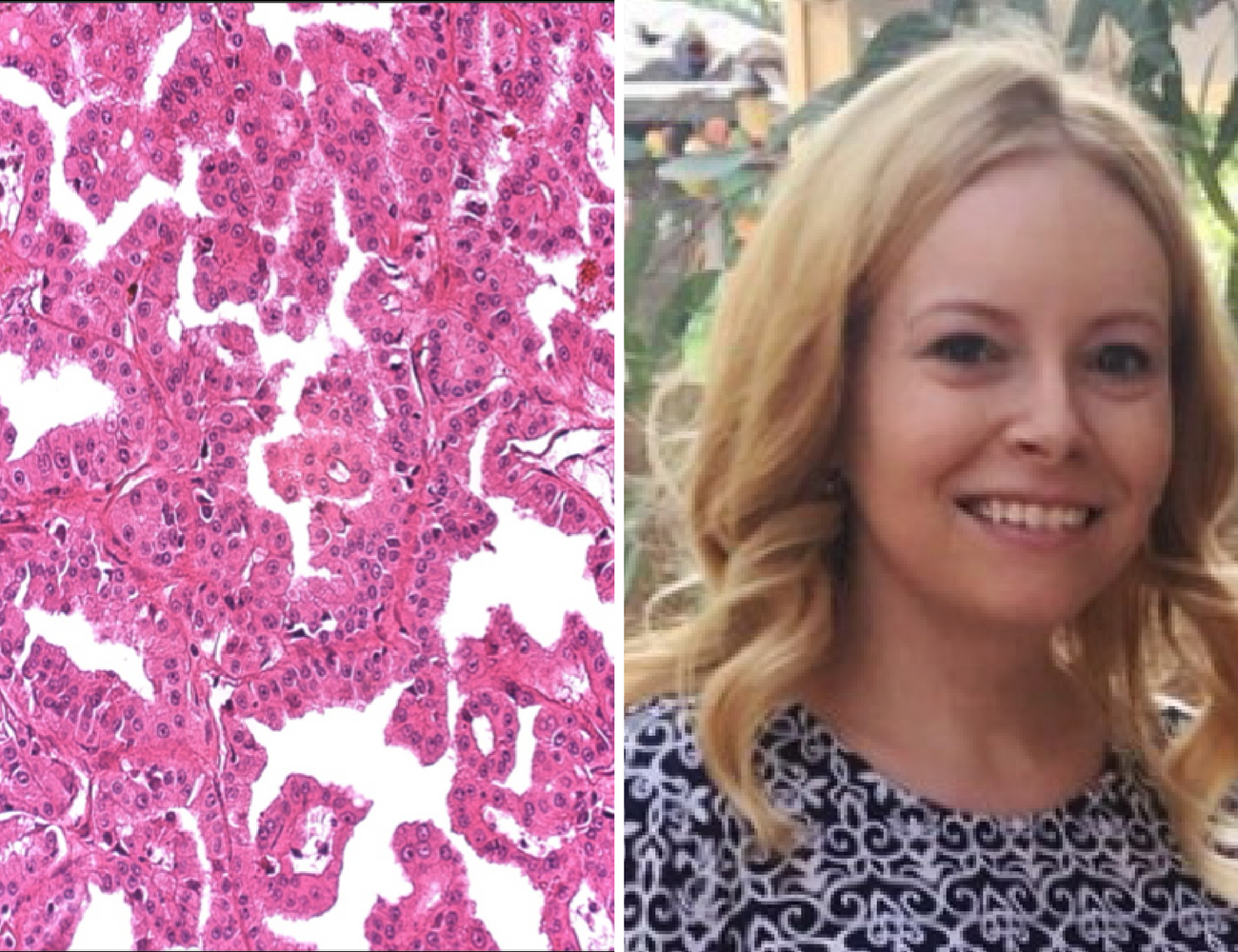
Laura Esfeller had just turned 29 when she learned she had stage IV type 2 papillary kidney cancer. In the account she shared with KCCure in 2018, she recalls the shock of that news and the questions it raised about why it had happened to her.
She later learned she had HLRCC. Looking back, she describes uterine fibroids from her early twenties and skin leiomyomas on her back that appeared about two years before the kidney cancer diagnosis. At the time, she writes, neither had alarmed her doctors.
Listening to what felt wrong
In a later interview published by The Patient Story in March 2024, Laura described fatigue and high blood pressure before her diagnosis, followed by back pain and swollen legs. She said an emergency-room visit led to the discovery of a tumor on her right kidney. She went on to have surgery at UCLA.
A place in a clinical trial
After having a kidney removed, Laura entered a clinical trial for papillary kidney cancer in 2016. In her March 2018 account, she reported no visible evidence of disease while taking Cabometyx. That is the experience she described at the time of publication, rather than a statement about her health today.
Laura credits her oncology care and the opportunity to participate in research. Her story also looks beyond her own treatment, toward the patients who took part in trials before her.
“I am eternally grateful for their courage.”
— Laura Esfeller, on the patients who joined earlier clinical trials; KCCure, 2018
Looking back in 2024
In the later interview, Laura described joining the SWOG S1500 PAPMET trial and being assigned cabozantinib. She also spoke frankly about the difficult side effects. She reported stopping treatment in April 2020 and continuing to have scans showing no visible evidence of disease at the time of that interview.
She described working as a patient advocate with doctors connected to the trial. These details bring her earlier account forward to March 2024; they do not establish her health status today.
Turning experience into advocacy
In the original story, Laura encourages people to learn about their disease and treatment options. She explains why clinical trials matter to her, both for the people taking part and for those who may benefit in the future.
The 2018 KCCure story identified Laura as a member of its Patient Advisory Board. Her account brings together the search for an explanation, the uncertainty of treatment and gratitude for the people who helped make her next steps possible.
Read Laura’s original 2018 account at KCCure and her later interview at The Patient Story for her own description of those experiences.
In their own words
This original HLRCC Foundation write-up draws on the story published by KCCure. Visit the source for the full account.
More of Laura’s story
Read the additional first-person account that also informs this article.